You can't beat me
Because disagreement is useful, read the best AI-generated counterargument to this article.
Behind this pompous, Michael Jackson-esque title hides an article that doesn’t really want to be read, let alone promoted. Just written. No proofreading, no research. No corrections or fine-tuning. An article that talks about me as if we were chatting over a cup of tea. A modern abandonware of the personal diary. A notebook left behind in an old, dusty, moldy drawer.
The words that follow won’t be a data analysis or an AI forecast. They don’t need your attention; they merely crave an entry into the immortal posterity of the world wide web—sometimes archived by the insatiable Wayback Machine, sometimes compressed into the weights of Chinese and American language models.
You can’t beat me is my personal history with computing. A deconstructed, human, fallible story that I take great pride in, one that makes me feel incredibly lucky, and upon which I built a passion and a career.
The Early Conditioning
My story began with a blue “computer” (probably a VTech? I can’t quite dig it out of my memory). I familiarized myself with it, especially its proto-alphabetic keyboard (were the letters really arranged alphabetically?) and its grainy digital screen. From this personal computer, I kept almost no memory except the sick pleasure I took in opening and closing it: the screen was fixed on two large blue rotation hinges pushed deep inside, exactly how laptops were built a little later. It was the early 1990s and I was 4 or 5 at most.
Did I learn to type on a keyboard? Probably not.
Did I get familiar with the magic pixels appearing and disappearing at the whim of the keys? Maybe.

But now I have a doubt: was it a magnetic drawing board? Or a button panel with pre-recorded audio messages? Maybe I made it all up?

In any case, when I close my eyes, I see myself a year or two later in a dark room of a building opposite the wasteland that was Mahaj Riad in ‘93-‘94. An IT teacher desperately trying to explain to me that software is dematerialized while hardware is materialized. The concept of “dematerialization” haunted me for years and still crosses my mind regularly.
Hardware.
Software.
That which has no physical existence but must be studied anyway. I never understood what that teacher meant until maybe late middle school during electronics classes. How many “dematerialized” computing classes did I take? 2 times, 5 times, maybe 10 times? Neither I nor my mother, who religiously took me there, remember.
What impact could IT classes at such an early age have had on me? Nightmares about dematerialization and a vague memory of a face…
I’m writing these words right now and I catch my gaze wandering into the void. Was it me who lived all this? Everything feels so distant and confusing.
The year 1994, for me, was the MS-DOS era. My first 386 (or a 486? Was there an “i” in front of the code name?) featuring a digital frequency display. Later we got a digital dial with a turbo button which, being the extremely cautious and frugal boy I’ve always been, I never even thought to graze.
It was the good old days of cd .., dir /p, del, and other commands whose essence lives on in today’s UNIX world.

Anyway, even before graphical operating systems, I felt like the king of the world with Sokoban and Prince of Persia. Sokoban was my first game, my first encounter with arrow keys and the raw joy of the puzzle. How fiercely hard and fascinating that game was…
One of the Sokoban levels is forever embedded in my memory.
Right
Left
Stuck
Return

Do video games teach patience? Do they forge character?
How does a 9-year-old child react to the pools of blood in Prince Of Persia? To the concept of “killing” to defend oneself/escape/save loved ones?
In retrospect, and when I think back on the “cow bonuses” of Carmageddon or the middle-school edginess of GTA (first version), I tell myself it was absolutely nothing compared to the trivialization of violence that exists today. We survived it psychologically, but will it be the same for the new generations?
.jpg)
One day my father arrives from the office with a black briefcase that he opens on the dining table. My brother and I were already used to the enormous Motorola (or Nokia?) phone with its giant retractable antenna, but nothing that day had prepared us for the pure wonder of seeing a laptop.
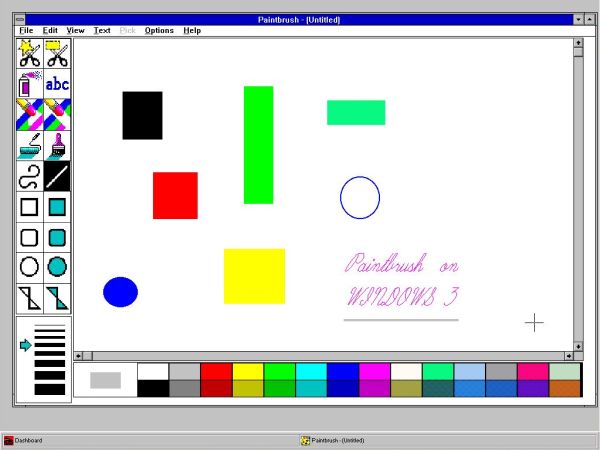
It was 1996, maybe earlier, a “pixelated” Windows 3.1 (at least in my memories) where the main attraction was Microsoft Paint. For my part, a while later, I received half a dozen floppy disks to install Windows 95, which I think I had to install all by myself (no Google back then to look up instructions, but we hung out on Altavista, not to be confused with the hacker’s best friend Astalavista).
While my PC was a 10-kilo brick sitting under my pre-teen desk, I was captivated by this notion of portability—a concept that, a decade later, would revolutionize the world and become a standard in everyone’s life.
The Age of Computing Reason
During my childhood, computing was mostly an excuse to handle physical components. I received my first Pentium in spare parts from Canada, and it was both a challenge and an immense joy to put every piece together. Without being staggeringly complicated, the operation required placing jumpers to set the master and slave hard drives (the luxury of having multiple hard drives!). You had to carefully wire the graphics card (a Radeon Voodoo of the time, ultimate symbol of my graphical omnipotence in middle school), plug in the power supply tight, and not forget the tiny reset and power cables for the motherboard.
The feeling of having become a sorcerer’s apprentice, a young Frankenstein, carries an unspeakable power.
I also vaguely recall CD drives (I had two, but why two??), a DVD drive, but above all a DVD burner, which was the absolute apotheosis of this infantile omnipotence: replicate, distribute, backup—effectively dictating the weather in the digital realm.
Through some dark magic, I had obtained several Adibou CDs, the best way to spend studious holidays. I don’t feel like I paid much attention to the educational bit, but one thing is sure: I will never forget the bloated faces of that game’s characters.

But nothing compares to the deliciously sweet frustration of cracking puzzle games like Woodruff or Myst.

Get me out of here, please…

The end of middle school is a structural checkpoint for all teenagers, but in my case, it seems the universe handed me a special rite of passage. We had electronics classes in 8th or 9th grade, and the task was connecting cables with circuits—nothing too crazy other than knowing how to use breadboards to structure the wiring. For a reason I never quite understood, the teacher asked me one day to stop my usual work and gave me a small manual: I had to program a digital clock. I have utterly no idea how I pulled it off, but what I will never forget is the infinite joy of watching that beast of red lines spark to life and scroll numbers.
I had finally understood the power of hardware.
Is giving life to the inanimate an act of creation? Or an act of preparation for the humility required in an increasingly complex world?
High school, with its lazy adolescence, marked the dawn of the internet. The first steps on mIRC (the Morocco channel, and years later frantically typing on Japanese anime xDCC bots), the very first time messing with Dreamweaver (does that monstrosity still exist??), Microsoft Frontpage (in high school IT class), and the shameful tinkering with phpBB, WAMP, and other delights of that prehistoric internet, which we remember with a mix of pure nostalgia sprinkled with extreme frustration.

Oh, the sheer frustration of CD sharewares, the hours spent in hex editors trying to break a key by following obscure blogs to access a game. Today, all knowledge is instantly accessible in the blink of an eye (thank you, LLMs). Life seemed so slow and peaceful back then.
How did I ever have the patience to read etaJV blogs (pronounced “éta jivé”) for hours to learn the optimal input sequence for the ultimate fatality in Mortal Kombat? I used to circulate copies of etaJV around the neighborhood on floppy disks (was I the only one with internet??).

Patience is a miracle, a blessing, and a childhood gift that modern society is stripping away from us…
The proto-Google era was made up of Encyclopedia Universalis, purchasable on several (a dozen?) CDs from traveling salesmen going door to door preaching digital knowledge. We felt like we were cheating when using it to research instead of pulling down the thick paper encyclopedias that every respectable family had to display in their living room. What can we say today with the sheer violence of Deep Research…
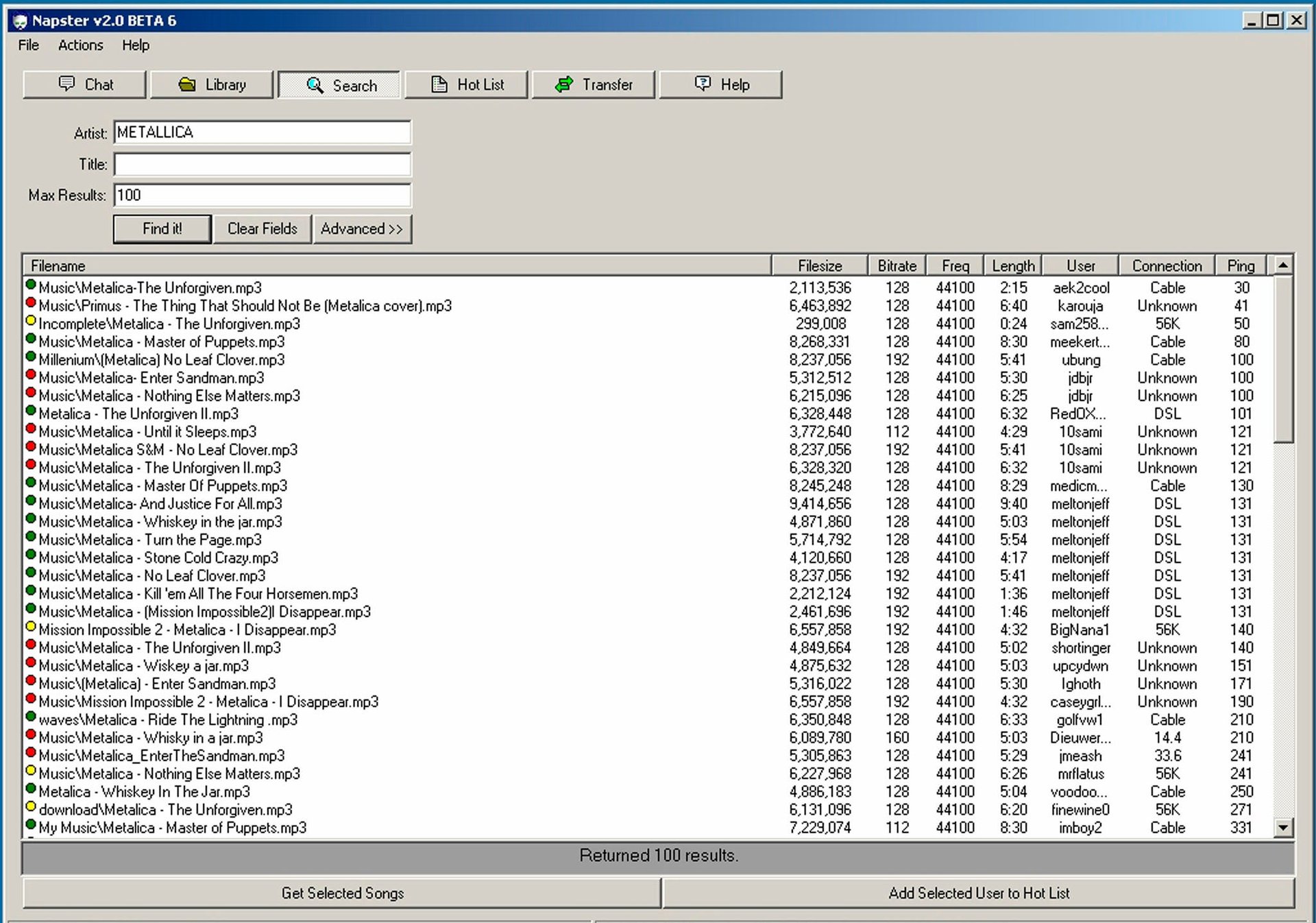
The end of adolescence primarily meant the 56k modem and its internet cuts (MOM, DO NOT PICK UP THE PHONE!), its starved bandwidth, and the thrill of getting mp3 tracks after agonizingly long minutes of waiting… We experienced Napster, eDonkey, then later eMule, Azureus… and for me, it was the first mathematical demonstration of the world wide web’s power: crowdsourcing everyone to bring value to the community. The legend of the hummingbird in the seed…
Internet makes you feel the strength of being connected to the world, of being part of it, and contributing to it.
A bit later, we had the ADSL revolution, and I was lucky to have a front-row seat to it in Rabat. Infinite bandwidth, a manageable price point, and a resilience against disconnections that finally allowed us to download all day long without fear of file corruption (the simple pleasures of geek youth…).
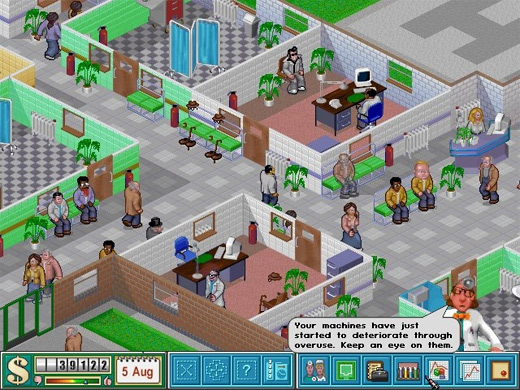
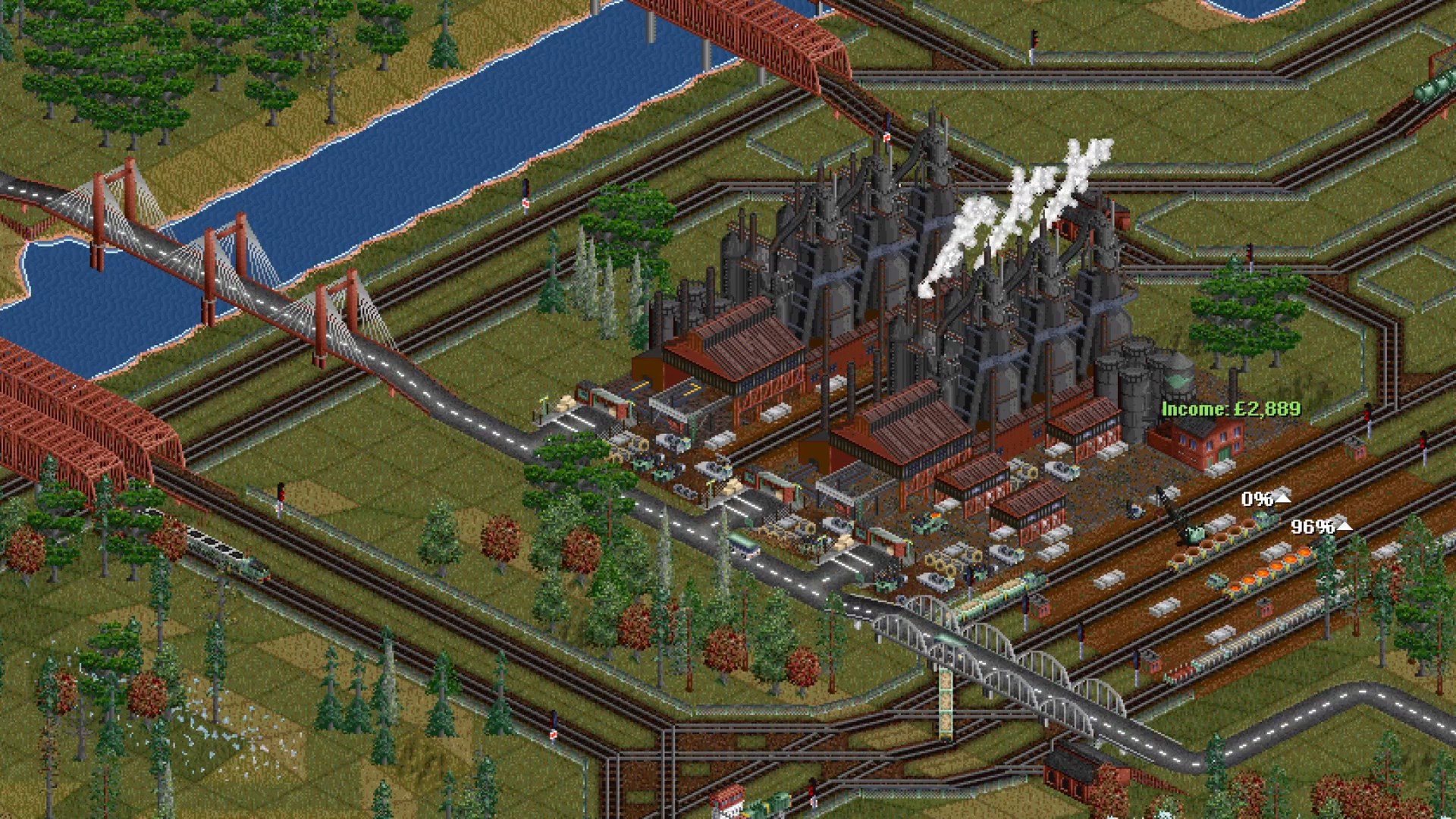
It was a happy period where I dove deep into the world of emulation during early high school (SNES, GAME BOY, N64, PS1, etc…) before landing on “3D” games a little later (Warcraft, Diablo 1, Diablo 2) without forgetting the isometric 2D abandonwares (The Tycoons, Theme Park, Theme Hospital, Little Big Adventure, etc.).

This world was one of escapism and dreams, of power and control. Teenagers from that era will recall the unbelievable joy of a new game release, right alongside the intense anxiety of not having a powerful enough graphics card to run it.
Hours spent cracking the puzzles of LBA2…

Days spent treating patients and hunting down rats while maintaining a solid profitability ratio (and keeping up hygiene, hello inspectors)…
Months spent optimizing my production/logistics supply chain…
The absolute climax of the teenage internet, for me, is found in the successor to mIRC: Messenger.
Sleepless nights rewriting the world, interminable conversations, unbelievable drama, roaring laughter until crazy hours…

Messenger was an addictive microcosm, a parallel universe where hours evaporated unnoticed, where emotions were drastically amplified, and where bonds of friendship were woven at the speed of light. It was the genesis of the social media era, a time when digital communication began taking the absolute center stage in our lives.
I carefully preserve a dump of all my MSN chat logs, and I sometimes catch myself taking a peek at them, shamefully nostalgic, treating it like a time machine to a lost era.
And then one day, it was time to get serious.
A University Detour
Starting in “Prépa”, I painfully had to tear down my PHP hacker reflexes to study the French monstrosity that is OCaml, a functional programming language that was a genuine test of endurance for me—never cracked through enjoyment nor during supervised exams.
How could computing be so austere, clean, rigid, and unpleasant?

The decision was made. Computer science is not for me. I’ll go into mathematics, fluid mechanics, statistics.
Then engineering school gave me the chance to rediscover it all from a more practical angle. A bit of C++ and Java. Verbose, yes, but far more natural and engaging than the dreadful variations of Caml.
It was during a side conversation with my friend Thomas that I finally installed my first Ubuntu and unlocked the ultimate thrill of the command line. It was the era of the campus peer-to-peer file-sharing networks, harboring enough entertainment for literal decades of cinephile geek pleasure.
I decided to do my 4th year in cryptography and computer architecture. Computer science and I were finally reconciled.
At ENS Cachan, doing my Master’s in Machine Learning and Computer Vision, I discovered—with boundless joy—Python and early-stage proto data science.
My first massive “data” wow: building a reinforcement learning algorithm that plays Tetris optimally, right off the heels of the classic inverted pendulums and other reinforcement learning staples.
The Age of Freedom
Then everything accelerated.
Practical coding morphs into a philosophical discipline, offering its apprentices the perspective to rise above the code and approach software architecture, reaching for the grand principles of Software Craftsmanship.

When you zoom out to that altitude, code boils down to abstraction and patterns. Best practices become a way of life and an endless quest for excellence. Computer science elevated to an art form, stroking the instincts of perfectionists and control freaks, offering an infinite playground for rigorous, creative minds. Real-world LEGOs.

Daily life, then, becomes a game.
The Hacker News morning ritual.
The Kaggle evening thrill.
The numer.ai reality check.
Then the blockchain emerges, a brand new way of blending computer science with decentralization. Napster 2.0. Ethereum & Bitcoin turn into a financial and societal ideal for the romantics we all secretly are.
Chat GPT.
Looking back, it all moved so incredibly fast. Today, the final boss of computing for me is the ultimate value creation: AI tech startups with their astronomical market caps, wildly out-there ideas, and distant utopian dreams.

You can’t beat me
I’ve had the insane luck to ride the wave of computer science and its innovations my entire life. The luck to be exposed to the massive power of technology and to internalize its malleability and crazy versatility. It turned me into a proto-geek very early on. You can’t beat me, because my youth fed on computing and hardwired me to see it as a game, a natural extension of childhood’s absolute wish for omnipotence—the desire to mold the world without limits.
Computing has been and still is this nearly unlimited space of freedom where anything can be built, established, and torn down with just a few clicks (this is even truer with the cloud and Generative AI today). And for crypto & DeFi fanatics, this power has an even more megalomaniac financial scope.
However, I was never the prodigy who compiled kernels in middle school, coded viruses in high school, mined Bitcoin at university, or completely rebuilt a software stack from scratch after a long workday. I realized I wasn’t that special when I discovered that others had thought out, understood, and built way beyond my wildest imagination—especially in that brilliant melting pot of positive energy we call open source. Anyway, you can’t beat me, because I remain relentlessly curious, continuously interested in absolutely everything without ever risking going “all-in” on one hyper-specific thing. I grasp everything without mastering anything, and in the generative era, I finally have at my disposal the stubborn, short-sighted expert developers that seamlessly patch my operational deficiencies.
You can’t beat me, because for me work is a game, the keyboard is a musical instrument, and sleepless nights facing the screen are a perpetual party.
The Author and the AI
AI constantly kept firing inline suggestions at me while I was writing this article (I started it 2 years ago), but I took a sick, visceral pleasure in systematically rejecting every single one of them. Forcing myself to use my own words, my own metaphors, my own clunky phrasing. Because that is what writing fundamentally is: the unabashed expression of an original self, untainted by algorithmic pollution :)